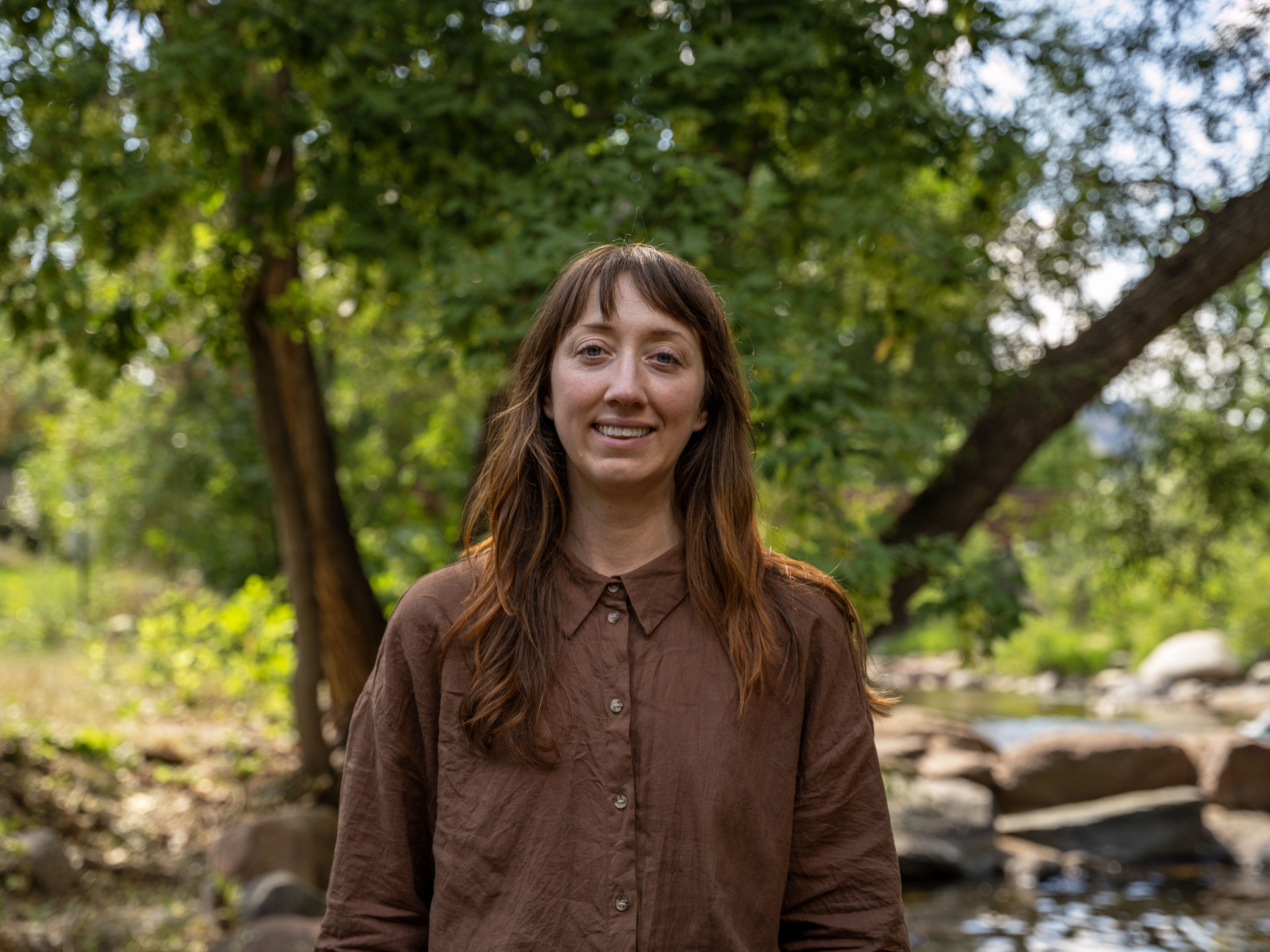
My job is to support the city’s water utilities groups by maintaining and improving the systems that drive operations, engineering, and planning. I specialize in providing spatial analyses, automating data workflows, and incorporating field data collection into the city’s systems to improve infrastructure management and decision-making. My work ensures accurate, accessible data for storm, sewer, and water distribution systems. I grew up as an avid horseback rider and am finally getting back into riding.

I grew up obsessed with the environment and I always wanted to work with wildlife – I just didn’t have a clear idea on how to do that. I ended up majoring in political science, but it was hard to stay engaged. It wasn’t connected to my passion for the environment, and the classes didn’t click for me.
While working in the service industry after graduating, I connected with a friend who was going to school for GIS. Not only were there many ways it could apply to the environment, but it was a technical applied skill which was very different from the political science skills I learned in college. I met someone else who worked for the GIS program, and they answered my questions and introduced me to others in the program. I decided to take a couple of non-degree seeking classes to see what it would feel like to go back to school.
It felt good to be back in school. I applied for a full certificate program and really enjoyed my classes and instructors at CU Denver. It was so helpful to have the flexibility to try out classes before fully committing to the program. By the time I had my GIS certificate I was only a couple classes away from full masters. That was how I ended up getting my master’s within 3 years during the COVID-19 pandemic, while also still working at a brewery.
While completing my master’s I worked at a non-profit, getting my foot in the door of the conservation world. Helping someone with a GIS issue while at a coffee shop ended up getting me a job with Colorado Parks and Wildlife, where I could do GIS work as well as policy work and stakeholder engagement. After graduating, I applied to the City of Boulder for a full-time position, and that role lined up my path to working in GIS support for the city’s utilities team.

I spend a lot of time helping city workgroups answer questions they have using all the data my team manages. My focus is on water distribution, supporting the water quality and wastewater teams. I look up information they need for annual reporting or active projects.
My job isn’t always people oriented, but I do support city staff who are using GIS software. I also troubleshoot when our databases or dashboards for visualizing data are having technical issues.
Managing the city’s assets – streets, buildings, etc. – is becoming a bigger part of my job. We look at the business needs of the city, and provide the data and information they need to make decisions.
I have always seen myself in public service. I love spending time in the community and getting to see the impacts of my work. In my role I get to help modernize systems that makes the data we collect more accessible and usable, giving it a greater purpose.
Infrastructure conditions across the country are not in a good place, there are a lot of outdated or damaged structures and not enough money to address those issues. It feels good to help infrastructure decisions locally. I help figure out how we can efficiently keep infrastructure safe for our community by targeting and prioritizing projects.
Starting higher education right after high school is not the only option. There are financially accessible ways to test out fields and pathways to see if you enjoy the classes and if the material clicks for you, before you commit to an expensive or long-term program. For example, take online or community college classes at reasonable prices or take a phased approach to getting a degree and take a few classes while working.
There is a lot you can do on your own to explore and test your interests, especially if its computer based. There are free courses through Harvard and other universities, including ivy league schools, to get certifications and learn different coding languages and other skills like GIS.