Explore South Boulder Creek: South Boulder Road

Shaping our Landscape

Here in the Front Range of Colorado most of our water starts out as snow high up in the Rocky Mountains. Some of this water will be diverted and stored for drinking water, agriculture and other uses rather than traveling downstream. Looking west as you cross the bridge over South Boulder Creek you start to see the iconic flatiron mountains. Beyond them is where South Boulder Creek begins.

South Boulder Creek has a rich history. It has shaped not only the landscape but the human history and development of this area. It created Eldorado Canyon, revealing millions of years of geologic history on its cliffs. The Ute Native American tribes came to the area to use the nearby warm springs for health and spiritual renewal. The town of Eldorado Springs became a resort destination. Climbers came to explore the sandstock rock cliffs. Hikers walk Boulder Open Space and Mountain Parks trails along the creek.
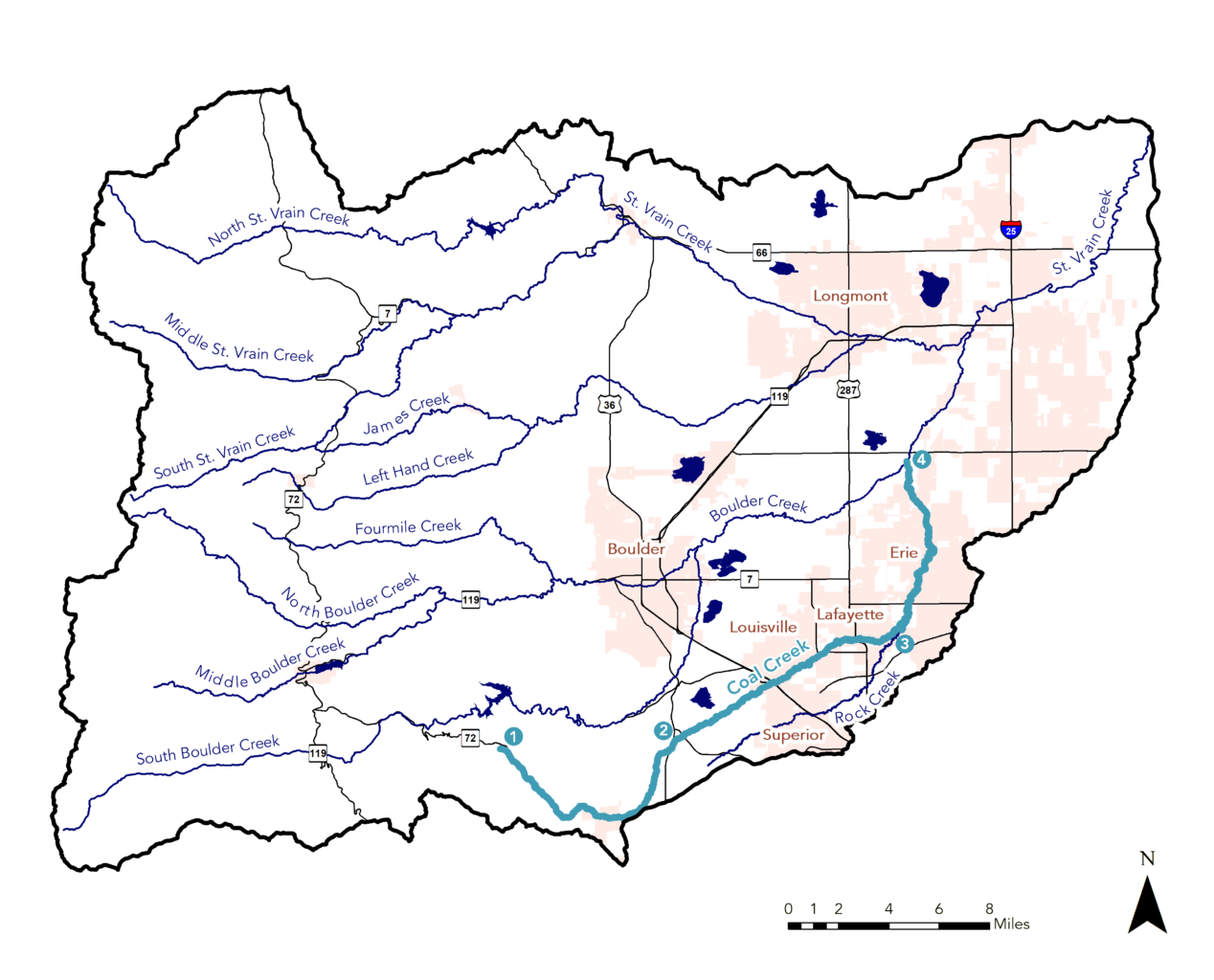
A map of the Boulder St. Vrain Watershed with numbers highlighted along Coal Creek. Text on this page describes what the numbers identify.

Where does South Boulder Creek come from?

South Boulder Creek starts near Rogers Pass up in the Indian Peaks Wilderness. It joins with water that has traveled through the Moffat Tunnel, helping move water that has come from the Western Slope to the Front Range. It helps fill Gross Reservoir, which stores water for the Denver metro area, provides flood control for South Boulder Creek, and generates hydropower. It rushes through Eldorado Springs Canyon before winding southeast around the City of Boulder.

Think about South Boulder Creek’s journey from the mountains to where you stand today. How have you used and benefited from this water?

A dirt path along a creek.

What do ditches do?

Past Eldorado Springs a series of diversion ditches begin to carry water out of South Boulder Creek into different directions. This water is used to irrigate agricultural land, provide drinking water to communities to the east, and for industrial purposes, like running the Valmont Power Plant.